Electric Popcorn ENG
MATERIALS
(1) 1 (2) 2 (3) skeins of Alpaca Sock by Garngejst, dyed for assigned pooling – meaning a wide section of the yarn is dyed in a contrasting colour. In this case, yellow.
Circular needles: 2.5 mm (40 cm and 60 cm)
Circular needles: 3 mm (40 cm and 60 cm)
Double-pointed needles (DPNs): 2.5 mm
Double-pointed needles (DPNs): 3 mm
OR use the magic loop method
(5) 5 (5) 6 (6) buttons
Stitch markers
Tapestry needle
YARN
Garngejst Alpaca Sock
60% Superwash Merino, 20% Superfine Alpaca, 20% Nylon
Yardage: 100 g = 400 m / 437 yds
GAUGE
10 x 10 cm = 27 stitches x 38 rows (in stockinette stitch)
PATTERN INFO
The cardigan is worked top-down.
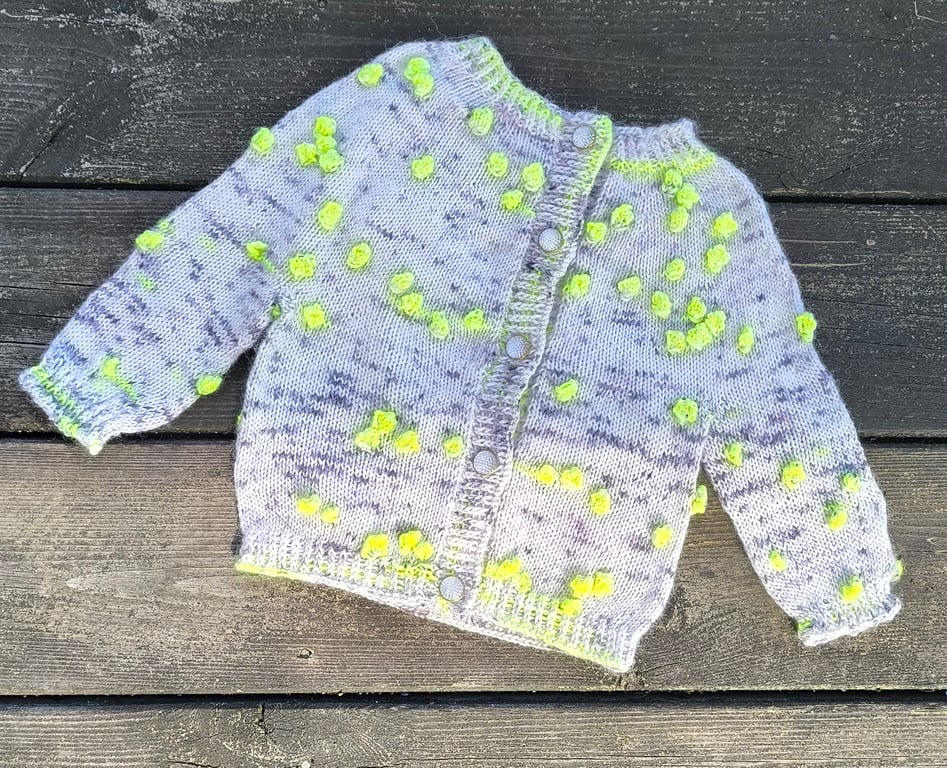
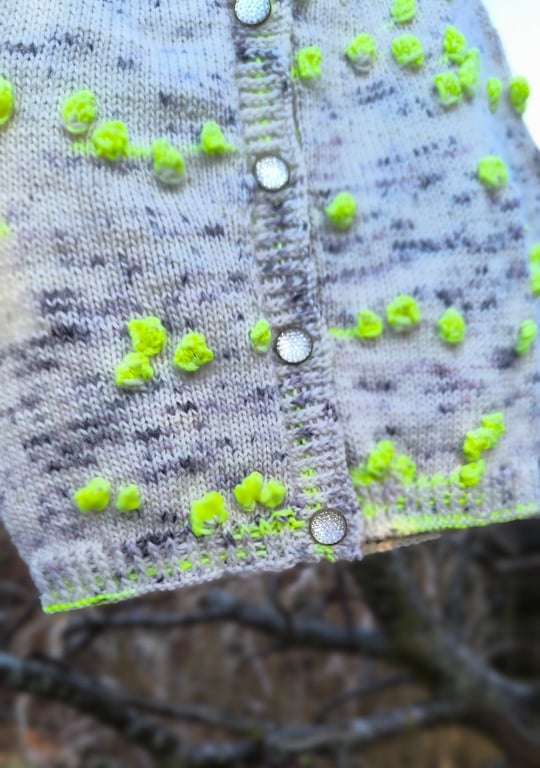
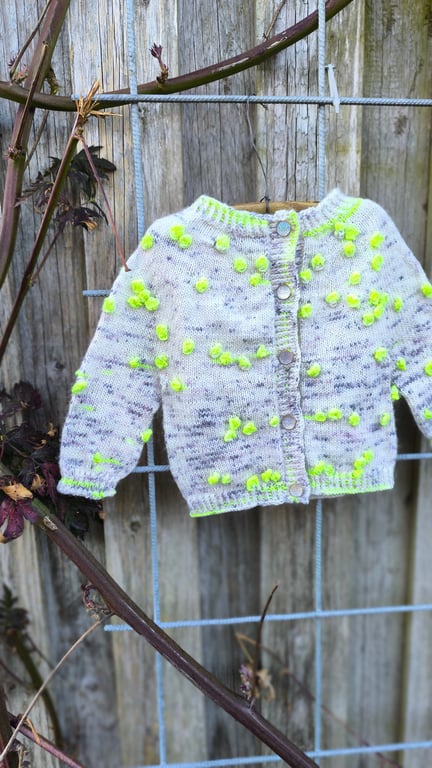
Each time the yarn changes colour, a “sailor bobble” is made.
The button bands are picked up and knitted at the end.
SIZES
(0–1 mo) 1–3 mo (6–9 mo) 1 yr (2 yrs)
MEASUREMENTS
Length: (24) 26 (27) 34 (38) cm
Chest circumference: (47) 49 (56) 64 (68) cm
INFO & TIPS
The cardigan is worked top-down, back and forth.
The neckline is worked first in a rib pattern with twisted knit stitches and slipped selvedge stitches.
There is one selvedge stitch at each edge of the work – always knitted on both right and wrong side. These selvedge stitches are not included in stitch counts.
The ribbing is worked in plain rib (no bobbles), but the rest of the cardigan features a “sailor bobble” every time the yarn changes colour.
These bobbles are worked on both right and wrong sides of the work.
The body and sleeves are separated and worked individually. Finally, stitches are picked up along the front edge for the button bands.